
Flood Restoration: What to Do in the First 24 Hours
When water gets into your home, the first few hours matter more than most people realise. What you do early can affect the amount of damage, how long the cleanup takes, and whether moisture turns into a bigger issue later.
The first day after a flood is usually stressful. You may be dealing with soaked flooring, damaged belongings, musty smells, and the uncertainty of what can be saved. A clear plan helps you act faster and avoid mistakes that make the situation worse.
For Perth homeowners, getting onto the cleanup quickly is especially important. Housekeeping WA positions flood restoration as a fast-response service for leaks, burst pipes, storm damage, extraction, drying, and cleaning support, with advice to act early so water does not sit and cause more damage.
Make Sure the Property Is Safe to Enter
Before you start any flood cleanup steps, check that it is actually safe to go inside.
If floodwater has reached electrical points, appliances, or power boards, do not enter or touch anything until the power has been isolated by a qualified person. The same applies if ceilings are sagging, walls look unstable, or the water source has not been stopped.
If the flooding came from stormwater, sewage, or unknown outside water, treat it as contaminated. In those cases, direct contact should be limited, and professional help is often the safer choice.
Stop the Water Source if You Can
One of the first flood cleanup steps is to stop more water from entering the property.
That may mean turning off the mains water if a pipe has burst, shutting off an appliance causing the leak, or dealing with a roof or window issue if rain is still getting in. There is little point trying to dry the area if water is still feeding the problem.
Once the source is under control, you can focus on minimising the spread.
Move People, Pets, and Valuable Items Out of the Area
Keep children and pets away from affected rooms while you assess the damage.
Then start moving items that can be saved. Focus first on electronics, documents, rugs, soft furnishings, clothing, and anything sitting directly on wet flooring. Lift lightweight furniture off wet surfaces where possible.
Acting early can reduce staining, warping, and ongoing moisture absorption.
Document the Damage Early
Before you start throwing things out or doing a major cleanup, take photos and videos of the affected areas.
Capture:
- wet floors and walls
- damaged furniture and furnishings
- affected rugs and carpets
- marks on skirting boards and cabinetry
- the likely source of the water
This is useful for insurance, landlord communication, or simply keeping track of how widespread the problem is. It is an easy step to overlook when everything feels urgent.
Start Water Removal as Soon as Possible
The longer water sits, the more it can soak into flooring, underlay, skirting boards, plaster, and joinery.
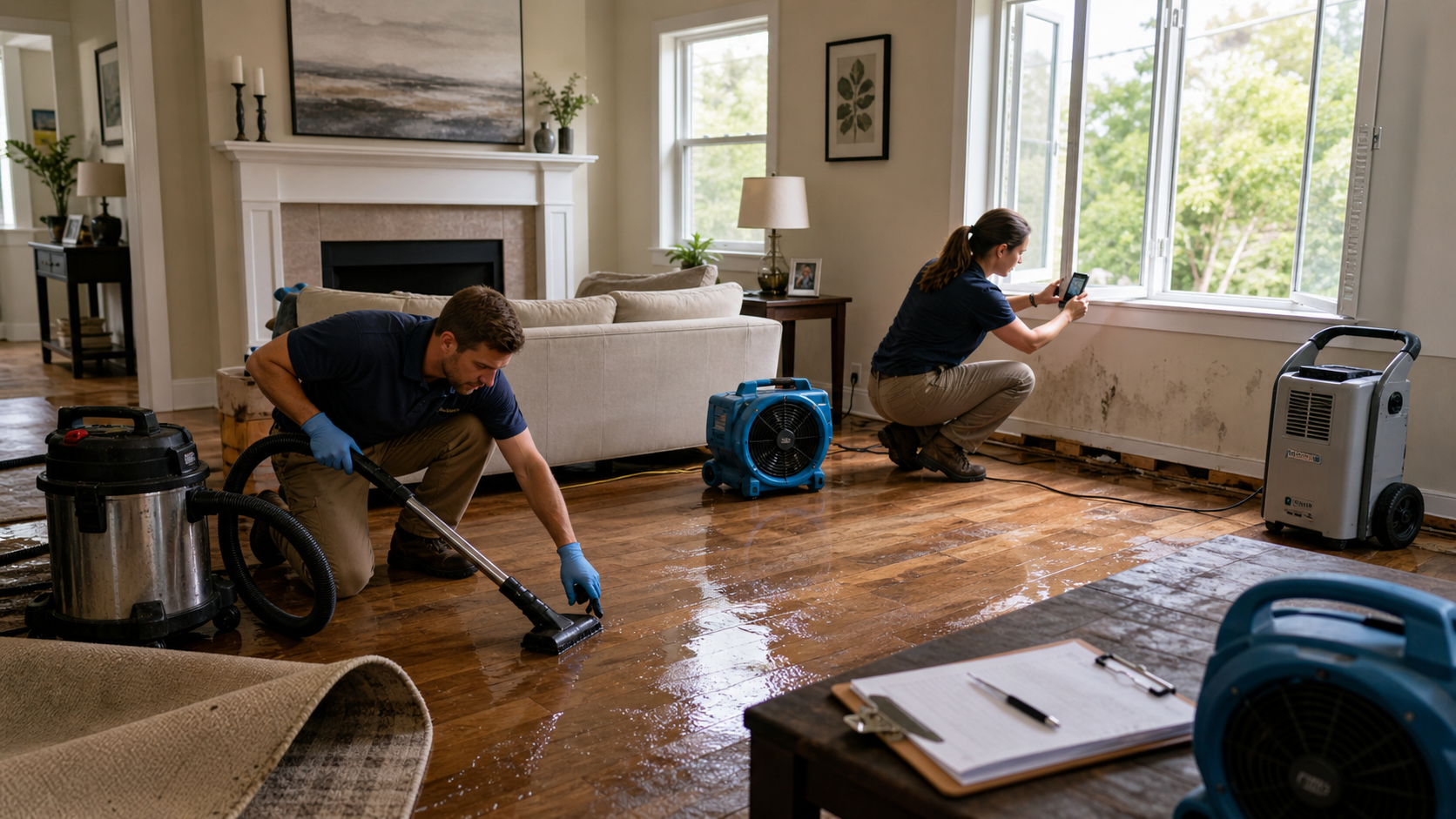
If the water is minor and clean, you may be able to begin removing it with towels, mops, or a wet vacuum. For more significant flooding, professional extraction equipment is usually far more effective.
This is one of the most important parts of flood restoration in the first 24 hours. Housekeeping WA’s flood restoration messaging also stresses fast extraction and thorough drying to reduce further damage.
Remove Wet Rugs, Towels, and Portable Items
Anything absorbent that stays in the room will keep holding moisture.
Take out wet towels, mats, cushions, portable rugs, and small furniture as early as possible. If they are left in place, they slow the drying process and can trap dampness against flooring and walls.
If an item is heavily soaked or contaminated, do not assume it can simply air dry and be fine later. Some materials need proper cleaning, drying, or disposal.
Improve Airflow Straight Away
Good airflow helps reduce moisture buildup in the property.
Open windows and doors if weather conditions allow and if it is safe to do so. Use fans to move air through the room. If you have access to a dehumidifier, that can also help draw moisture out of the air and speed up drying.
Drying is not just about what you can see on the surface. Moisture often lingers in carpets, underlays, timber, plaster, and other porous materials after the visible water is gone.
Be Careful With Carpets and Soft Furnishings
Wet carpet can look manageable on the surface while holding a lot more water underneath.
That is why flood cleanup steps should not stop at blotting or surface drying. Underlay and subfloors can stay damp long after the room appears dry, which can lead to odours, mould growth, and material breakdown.
Housekeeping WA’s broader restoration and mould messaging also links fast action after leaks and flooding with better drying outcomes and reduced risk of mould issues.
Do Not Ignore Walls, Skirtings, and Built-In Joinery
Water damage is not limited to the floor.
Check skirting boards, lower wall sections, built-in cupboards, vanity units, and the base of kitchen cabinetry. If these areas have absorbed water, they may swell, stain, or deteriorate over time.
Even if the room starts to look better after a quick tidy-up, hidden moisture may still be sitting inside materials.
Clean and Disinfect Where Appropriate
Not all floodwater should be treated the same way.
If the water came from a clean internal source, such as a burst flexible hose or overflowing sink, the affected area may be easier to clean once water has been extracted. If the floodwater came from outside runoff, sewage, or anything contaminated, proper cleaning and disinfection become far more important.
This is where people sometimes underestimate the job. Flood restoration is not just about drying. It can also involve cleaning, sanitising, and making the space safe to use again.
Watch for Signs of Mould Starting
Mould can begin developing surprisingly quickly when moisture is trapped indoors.
Keep an eye out for:
- musty smells
- damp patches that do not seem to dry
- discolouration on walls, skirtings, or ceilings
- lingering humidity in closed rooms
Housekeeping WA offers both flood restoration and mould cleaning, which suggests they commonly see how one issue can lead into the other when moisture is not dealt with properly.
Know When the Damage Is Beyond a DIY Cleanup
Some minor water incidents can be managed at home if you act quickly. Others need professional help from the start. That is usually the case when:
- the water has covered a large area
- carpets and underlay are heavily soaked
- water has reached walls or cabinetry
- the source involved stormwater or contamination
- the property has a strong damp smell after initial cleanup
- the affected area is not drying properly
Housekeeping WA presents its Perth flood restoration service around quick response, extraction, drying, cleaning, and practical support for property owners.
Why the First 24 Hours Matter So Much
The first day is about control.
You are trying to stop the spread, remove as much water as possible, protect what can be saved, and start drying before moisture settles deeper into the property. Acting early can help reduce damage to carpets, flooring, walls, and furniture, and it can also lower the chance of mould becoming the next problem.
That is why flood restoration in the first 24 hours should be treated as urgent, even when the flooding looks minor at first.
Help for Perth Homes After Water Damage
When a home has taken on more water than you can realistically manage yourself, getting professional support early can make the recovery process much smoother.
Housekeeping WA offers flood restoration in Perth for issues such as leaks, burst pipes, and storm-related water damage, with a focus on fast extraction, drying, and restoring affected areas safely. Their wider service offering also includes mould cleaning support, which matters when moisture is left behind after flooding.